When most businesses hear the word audit, they often think of a long spreadsheet full of technical issues that is difficult to understand and even harder to act on. That can happen, but a useful audit should do much more than point out surface-level problems.
A proper review should show how your website is currently performing across both traditional search and newer AI-driven search environments. It should also make it clear what needs fixing first, what is already working, and where the biggest opportunities sit. If you want to understand how this fits into my wider approach, you can see the main SEO and AI search visibility services on the homepage.
An audit should start with technical foundations
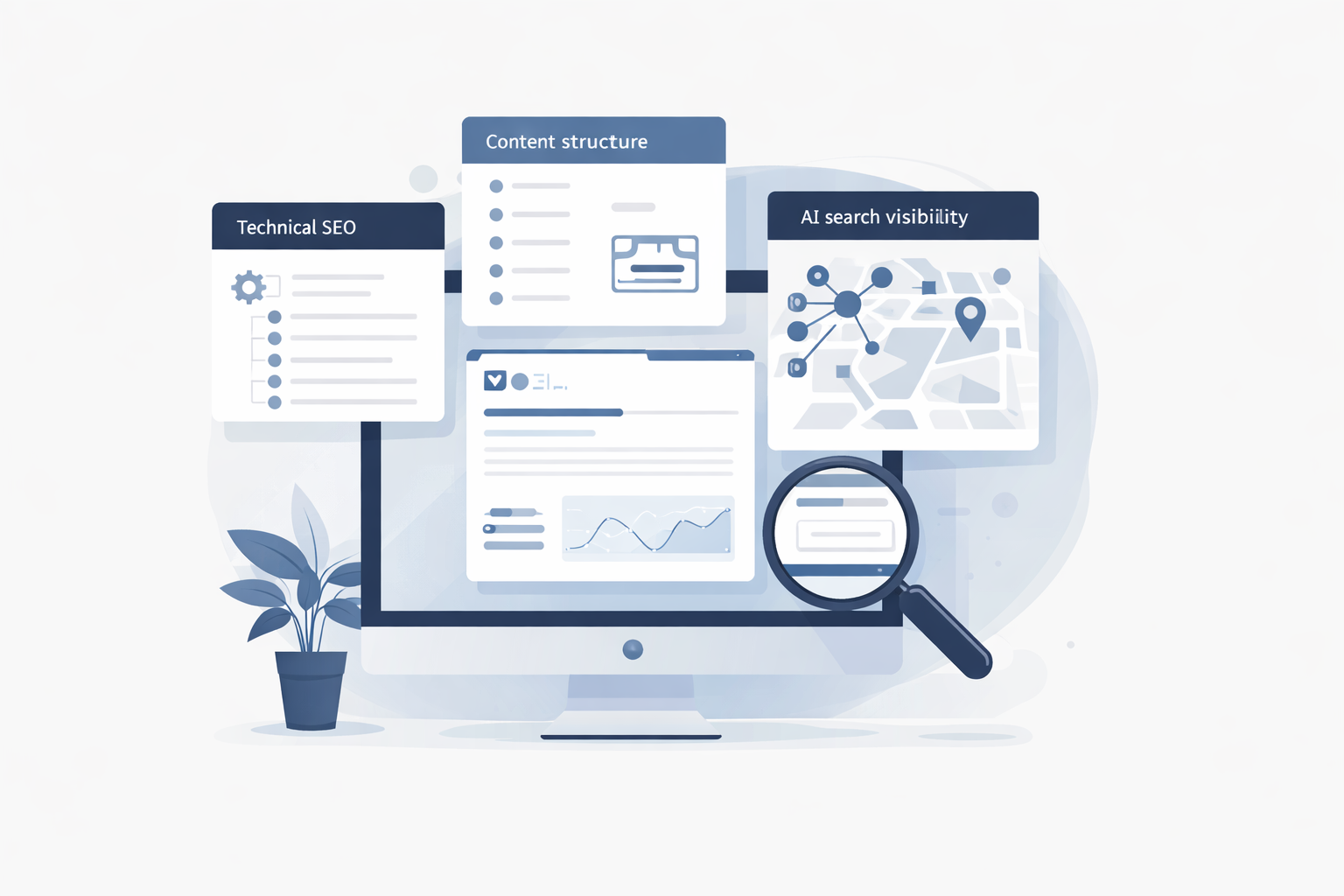
The first part of any SEO and AI search audit should look at the technical side of the site. That includes crawlability, indexing, internal linking, page speed, heading structure, duplicate issues, and whether search engines can access and understand the main content properly.
This still matters because no amount of strong copy will perform well if the site structure is weak or important pages are hard to reach. It also matters for AI search, because pages need to be accessible and clearly structured if they are going to be interpreted correctly. The strongest audits do not stop at listing problems, they explain which issues are actually affecting visibility and which ones are lower priority.
Content structure is just as important as rankings
A useful audit should look closely at how content is written and organised, not just whether a keyword appears on the page. Search engines and AI tools both rely on clear page structure, obvious topical focus, and content that answers real questions properly.
That means reviewing whether service pages are too vague, whether important topics are missing, whether headings are doing their job, and whether the site makes its expertise obvious. It should also highlight whether your content supports the wider signals covered in my SEO & AI visibility work, such as structure, technical clarity, authority, and entity understanding.
An audit should look at authority, not just on-page SEO
Many websites are let down by weak trust signals rather than just weak content. A proper audit should look at how credible the business appears online, including backlink quality, mentions, business consistency, and whether the website gives enough evidence that the company knows what it is talking about.
This is especially important now that AI search tools often pull together information from multiple sources and weigh up how trustworthy a business appears. If your site says the right things but there is very little around it to support those claims, visibility can still be limited.
Local businesses need a more specific review
If you mainly work in a local area, the audit should not be too broad. It should review location relevance, Google Business Profile signals, local landing page quality, service-area coverage, review signals, and whether the site is aligned with the way people actually search in that area.
For businesses in Gloucestershire, that can mean checking whether the site reflects local search intent properly and whether it is clear who you help and where. Local visibility is not only about appearing in standard map results now. It is also about giving search engines and AI systems enough context to understand your relevance in a place like Cheltenham and the surrounding area.
The most useful audits end with clear priorities
An audit is only valuable if it leads to action. By the end of it, you should know what the immediate problems are, what the medium-term opportunities are, and what is likely to make the biggest difference first.
That could be improving weak service pages, restructuring content, fixing technical barriers, strengthening local relevance, or improving authority signals. It should leave you with a practical route forward rather than a document that gets ignored after one read.
If you want a clearer view of how your site is currently performing across Google and AI-driven search, you can request a free audit through the homepage.