A lot of local service pages look like they should be doing the job.
They have a heading, a bit of copy, maybe a contact form, and the name of the service somewhere on the page. On the surface, that seems fine. The problem is that a lot of them still do not explain enough.
That matters because a service page is often doing two jobs at once. It needs to help a real person understand what the business offers, but it also needs to give search engines and AI-powered tools enough clarity to interpret the page properly.
If it is vague, too thin, or too broad, it becomes much less useful on both fronts.
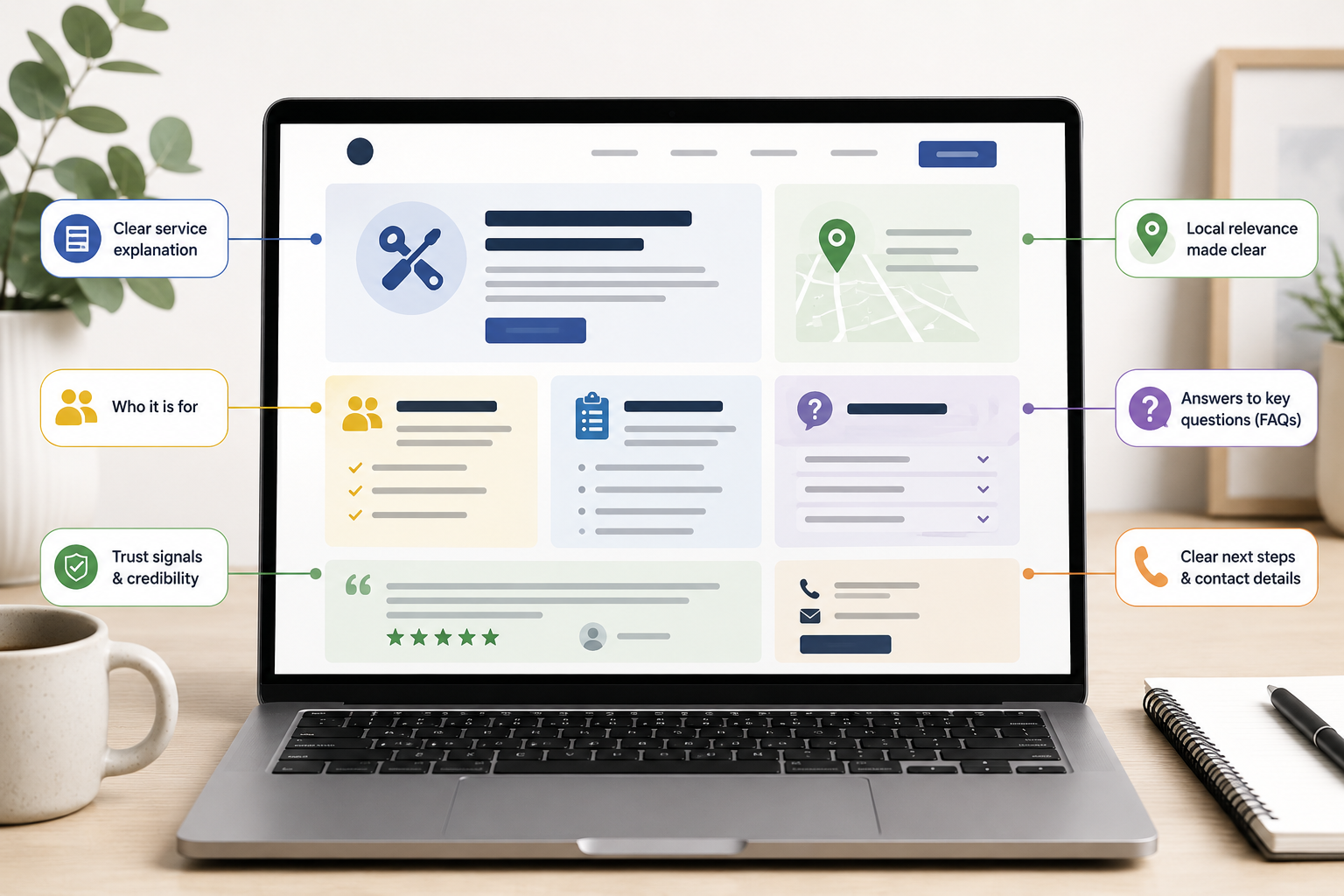
It should be obvious what the service is
This sounds basic, but it is often where things start to go wrong.
A good service page should make it clear straight away what the service actually is. Not in a vague “solutions” sort of way, and not hidden behind polished but broad wording. A visitor should not have to read half the page before working out what is being offered.
The heading matters here, but so does the opening section underneath it. That is usually where the page either becomes clearer or starts to drift into general copy that could sit on almost any website.
It should explain who the service is for
One of the easiest ways to make a service page more useful is to make it clear who it is aimed at.
That does not mean excluding everyone else. It just means helping the right person recognise themselves in the page. If someone lands on it and cannot tell whether the service is relevant to their situation, the page becomes much weaker.
For local businesses, that might mean explaining whether the service is aimed at homeowners, business owners, landlords, local companies, or a certain type of customer. The more specific the fit, the easier the page becomes to understand.
It should say how the service helps
A lot of service pages list what the business does, but not what the customer gets from it.
That is where they can fall flat. People are usually trying to work out whether the service solves their problem, not just whether it exists. So the page needs to bridge that gap clearly.
That could mean explaining what the service helps with, what common problems it addresses, or what kind of outcome someone can expect. It does not need to be overblown. It just needs to feel useful.
It should make local relevance clear where it matters
If the business mainly works in a specific town, city, or region, the page should make that clear in a natural way.
That does not mean forcing location terms into every paragraph. It means giving enough local context so that both users and search systems can understand where the service is relevant.
Sometimes that will sit in the opening copy. Sometimes it will come through in examples, FAQs, or supporting sections. The important point is that the local relevance feels real rather than bolted on at the last minute.
It should answer the questions people are likely to have
A stronger service page usually answers a few of the questions people are already thinking about.
- what is included
- how the process works
- who the service is right for
- what happens next
- what makes this approach different
This is one of the main differences between a page that just exists and a page that genuinely helps. Useful answers make the page more practical, but they also give search systems more context to work with.
It should not try to cover everything at once
Another common problem is when a service page tries to do too much.
Instead of clearly focusing on one service, it drifts into related services, company background, generic marketing copy, and bits of information that really belong somewhere else. That usually makes the page feel less clear, not more complete.
A good service page should have a clear purpose. It should stay on topic, explain that one service properly, and then link off to related pages where needed.
It should include trust signals
A service page becomes much more convincing when it feels credible as well as clear.
That can come from things like:
- reviews
- signs of experience
- FAQs
- examples of the sort of work you do
- clear contact details
- a straightforward explanation of your process
Not every page needs all of those, but most good service pages include some form of reassurance. If the page says the right things but gives no real confidence behind them, it is less likely to do its job.
It should lead somewhere
A lot of service pages explain a service, then more or less stop.
A good page should make the next step obvious. That might be getting in touch, requesting a quote, making an enquiry, or moving to a related page for more detail. If the page leaves people unsure what to do next, it creates friction it does not need.
The strongest pages usually make that next step feel easy and natural.
It should fit properly into the rest of the site
A service page should not feel isolated.
It should connect properly to the homepage, related services, supporting content, and any useful FAQs or trust pages. That helps users move through the site more easily, but it also helps search engines and AI-powered tools understand how the page fits into the wider structure.
This is where internal linking quietly does a lot of good work.
The practical takeaway
A good local service page does not need to be clever. It just needs to be clear.
It should explain what the service is, who it is for, how it helps, where it is relevant, and what someone should do next. If it can do that while also answering useful questions and giving a few trust signals along the way, it is already in a much better place than most.
For a lot of local businesses, improving service pages is one of the simplest ways to make the website more useful, more convincing, and easier to understand.